


Table of Contents
Running a small business usually means you are the marketing department. You write the emails, you manage the ads, and you post on social media. It is exhausting, and there is a limit to how many people you can reach on your own.
Imagine if you had a team of salespeople promoting your products every day, but you only had to pay them when they actually made a sale. You wouldn't be risking your budget on ads that might not work. You would be paying strictly for results.
That is exactly what an affiliate program does.
For years, managing an affiliate program seemed like a luxury reserved for retail giants. If you didn't have a dedicated tech team or a massive budget, you were usually stuck paying high monthly fees to third-party networks just to play the game.
That barrier is gone. You can now build a fully functional, self-hosted program directly on your WordPress site without writing a single line of code.
You don't need to hire a developer. You don't need complex integrations. You just need the right tool and a few hours of focus.
I’m going to walk you through the exact setup process to get from zero to launch, so you can start tracking referrals and paying commissions immediately.
Why Affiliate Marketing Works for Small Businesses
Most marketing strategies require you to spend money before you make a dime.
SEO is a long game that takes months to show results. Paid ads require a budget regardless of whether anyone clicks or buys. Hiring a sales team means adding payroll and benefits before they close a single deal.
Affiliate marketing flips this model entirely. You only pay a commission after a sale is confirmed and the money is in your bank account.
Here is why this shifts the odds in your favor:
- No Upfront Marketing Spend: You aren't gambling your budget on a campaign that might flop. The risk is on the affiliate to create the content and drive the traffic.
- Cash Flow Friendly: Since you pay commissions out of revenue you have already earned, you never go out of pocket to acquire a customer.
- Instant Audience Leverage: Building an audience from scratch takes years. Affiliates allow you to tap into established communities that already trust the creator's recommendation.
- Scale Without Headcount: You effectively gain a sales team without the HR headaches. You can have 100 affiliates promoting you simultaneously without hiring a single new employee.
However, this only works if your foundation is solid. A poorly structured program can attract low-quality partners, eat into your margins, or sit dormant because the signup process is too difficult.
As you read on, I will show you how to build the engine that powers your program so you can focus on growth later.
What You Need Before You Launch
You don't want to start building your program only to realize halfway through that you are missing a critical piece of the puzzle. Before you install any plugins, make sure you have these three categories sorted.
1. The Technical Requirements
You can't track commissions if you don't have a way to track sales. At a minimum, you need:
- A WordPress Website: Since we are focusing on a self-hosted solution, this is your base.
- A Live Product or Service: You need something ready to sell right now.
- A Connected Payment Processor: Your site needs to be able to accept money. Easy Affiliate integrates seamlessly with major platforms like WooCommerce, MemberPress, and Easy Digital Downloads. If you are using one of these, you are already ahead of the game.
2. The Strategic Decisions
You need to decide the “rules of the game” before you invite players.
- Commission Rate: How much are you willing to pay? I will cover the math later in this article, but start thinking about your margins now.
- Cookie Duration: If a customer clicks an affiliate link today but buys next week, does the affiliate still get paid? The standard is 30 days, but you can adjust this based on your sales cycle.
- Access Control: Will you let anyone join, or will you vet them first? I strongly recommend an application-based process to keep quality high.
3. The “Nice-to-Haves”
Technically, you can launch without these, but having them ready makes recruitment much easier.
- Marketing Assets: A folder of banners, logos, and product images so affiliates don't have to create their own.
- Clear Positioning: A one-sheet or simple guide that tells affiliates exactly how to describe your product to their audience.
- A Shortlist of Partners: Do you have 3-5 people in mind to test the program with?
How to Set Up Your Affiliate Program with Easy Affiliate (Step by Step)
Now that you have your strategy in place, let’s build the engine. The beauty of Easy Affiliate is that it lives right inside your WordPress dashboard, so the interface will feel familiar immediately.

- Step 1: Install the Plugin. Treat this just like any other WordPress plugin. Purchase Easy Affiliate. Upload the zip file and click Activate. There are no database tweaks, no server scripts to run, and absolutely no code required.
- Step 2: Run the Setup Wizard. The plugin will automatically launch a wizard to guide you through the essentials. This is where you connect your specific payment integration (like WooCommerce, MemberPress, or Easy Digital Downloads), set your default commission rate, and configure your cookie duration. For handling payouts later, selecting PayPal here is the easiest way to start.
- Step 3: Enable Affiliate Applications. Do not skip this step. Go to your Settings and ensure the application requirement is turned on. You want to vet who is representing your brand, not let bots or spammers sign up automatically.
- Step 4: Turn on UTM Tracking. Find this toggle in the Settings menu. Enabling UTMs adds specific tracking data to every link your partners share. This lets you see exactly where they are promoting you, critical for catching fraud and understanding which social platforms are actually driving sales.
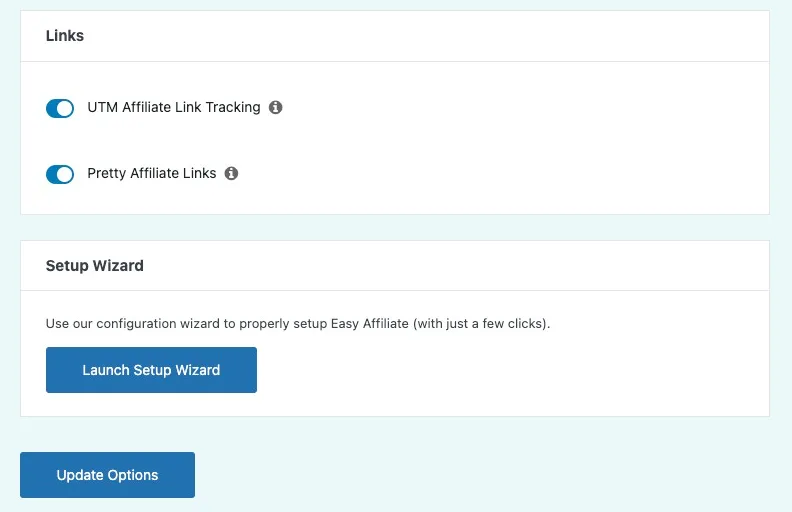
- Step 5: Customize Your Signup Page. Easy Affiliate generates a registration page for you automatically. Take a moment to review it and add any specific questions to the application form, such as asking for their website URL or primary social media handle.
That’s it. You now have a working affiliate program ready to accept partners. Total setup time: under 30 minutes.
How to Configure Your Commission Structure
Setting your commission rate is a balancing act. You want to offer enough to motivate affiliates to work hard for you, but not so much that you wipe out your own profit.
Finding Your Rate
The “right” number depends heavily on what you are selling and your specific profit margins. Here are some general rules of thumb to help you decide:
- Digital Products (20-50%): Because there are virtually no manufacturing or shipping costs, high margins allow you to be very generous. This is often necessary to compete for attention in the digital space.
- Physical Products (5-15%): Your margins are much tighter here. Factors like storage, shipping, and raw materials mean you’ll likely stay on the lower end of the scale.
- Subscriptions: You have to decide if you want to pay a high commission on the first month only or a smaller, recurring commission for the life of the customer. Recurring commissions are a massive draw for high-quality affiliates.
Using Easy Affiliate’s Flexibility
You don’t have to lock yourself into a one-size-fits-all model. Easy Affiliate gives you several ways to fine-tune your payouts:
- Default Rates: Set one global percentage that applies to everyone who signs up.
- Individual Overrides: If you land a “mega-influencer” or a top-tier partner, you can manually increase their specific rate to reward them.
- Performance Tiers: You can set up your system to automatically increase an affiliate’s commission once they hit a certain sales volume.
- Recurring vs. One-Time: Easily toggle whether you pay for every renewal or just the initial signup.
Pro-Tip: Start simple. Pick a default rate that is competitive for your industry. It is much easier to increase a top performer's rate later as a reward than it is to lower everyone's rate because you realized your margins were too thin.
How to Set Up Your Affiliate Dashboard
If your affiliates can't see their stats or find their links, they’ll stop promoting you. They need a dedicated space where they can manage their own account, track their earnings, and grab marketing materials whenever they need them.
In Easy Affiliate, this is handled by the Affiliate Dashboard. It’s a secure, private area created automatically on your site, designed so your partners can be self-sufficient.
What Your Affiliates Get
When a partner logs in, they have everything they need to run their own “mini-business” promoting your brand:
- Live Performance Tracking: They can see exactly how many clicks they’ve sent and how many sales they’ve generated.
- Automatic Link Generator: Your partners can turn any page on your site into a tracking link with one click. They don't need to learn complex code or wait for you to generate links for them.
- The “Creatives” Library: This is where you store your banners, logos, and pre-written social media posts. Your affiliates can download these assets directly from the dashboard.
- Payout Transparency: They can see their total unpaid balance and a history of every payment you’ve sent them.
Your Role: Providing the Tools for Affiliates
While the dashboard handles the technical display, you are responsible for the content. To make it effective, you should:
- Upload Your Assets: Don't make affiliates design their own ads. Give them high-quality images and banners in various sizes.
- Define the Rules: Use the dashboard to host a simple “Partner Guide” that explains your brand's do's and don'ts.
- Set Your Payout Routine: Establish a clear schedule, like paying out on the 1st or 15th of every month, so your partners know exactly when to expect their money.
Customization Tip: You don't need a designer to make this look professional. You can use the WordPress Customizer to swap colors and fonts so the dashboard feels like a seamless part of your existing website.
What Next?
Completing the setup is a massive milestone, but it’s just the beginning. Now that the engine is running, you need to move your focus from building to growing.
A successful affiliate program is one that actively brings in revenue. Here is what you should prioritize over the next few weeks:
Start Recruiting: Your program won’t promote itself. You need to invite your best customers and reach out to niche creators to get those first few links out into the world.
Protect Your Brand: As you scale, you’ll want to ensure you are only working with high-quality partners. Set up your vetting process now to prevent coupon-site spam and click fraud.
Manage Your Time: Don’t let your new program become a full-time job. With the right systems, you can manage a thriving affiliate network in just a few minutes a week.
Ready to launch?
You don't need a massive team or a tech background to build a professional affiliate program. Easy Affiliate makes the process simple: install the plugin, follow the wizard, and you’re ready to start growing your business through the power of partnership.
Start Your Affiliate Program Today!
What’s the biggest thing that’s been holding you back from starting an affiliate program for your business? Let me know in the comments.
If you liked this article, follow us on Twitter, Facebook, and LinkedIn. And don't forget to subscribe in the box below!


Leave a Reply